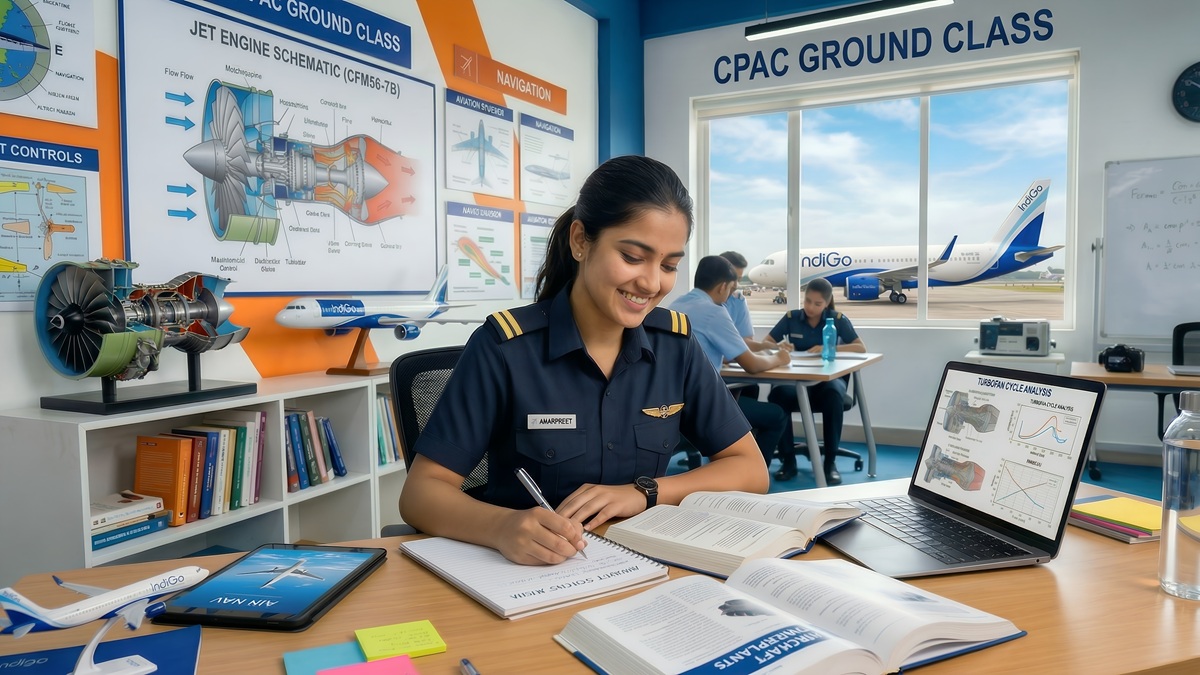
Every student pilot begins their aviation journey with excitement — airline dreams, the idea of sitting in the cockpit, and the thrill of flying an aircraft. At this stage, aviation feels inspiring and aspirational.
However, as training progresses, students quickly realize that becoming a pilot is not just about flying. It is about understanding the machine you are responsible for.
Before a pilot can confidently control an aircraft, they must understand how it works, how its systems behave, and how different conditions affect its performance. This understanding is built through Technical General.
Technical General is the subject where aviation transforms from a dream into a disciplined profession. It teaches you how an aircraft produces power, how systems support flight, and how decisions in the cockpit are based on technical awareness rather than guesswork.
Students who build a strong foundation here find it much easier to progress through their flying training and handle real-world situations with confidence.
Why Students Struggle With Technical General
Technical General is often considered one of the most challenging DGCA CPL subjects. While the syllabus is extensive, the real difficulty lies in the way students approach it.
One of the most common issues is lack of structure. Students try to study multiple topics at once without understanding how they are connected. Engines, systems, instruments, and aerodynamics are all interrelated, and studying them randomly creates confusion rather than clarity.
Another major problem is memorisation without understanding. DGCA questions are rarely direct. They test application. A student who memorises definitions may fail when the same concept is asked in a different way.
Students also fail to connect theory with real flight. When topics are studied in isolation, they feel abstract. But every concept — from lift generation to fuel flow — directly affects flight operations.
Visual learning is another major gap. Aircraft systems are designed visually — pipelines, circuits, airflow paths. Students who don’t use diagrams struggle with retention.
Finally, lack of mock testing leads to poor exam performance. DGCA exams are time-bound and logic-driven. Without practice, even strong students lose marks.
What Technical General Actually Covers (DGCA Syllabus Breakdown)
Technical General becomes manageable only when aligned exactly with the DGCA CAR syllabus.
| Module | Coverage |
|---|---|
| Airframe & Systems | Structure, hydraulics, pneumatics, fuel systems, anti-ice |
| Electrical | DC & AC systems, generators, TRU, distribution |
| Powerplant | Piston engines, turbine engines, engine systems |
| Instruments | Pitot-static and gyroscopic instruments |
| Emergency Systems | Fire detection, oxygen, safety equipment |
| Principles of Flight | Aerodynamics, stability, control, propellers, flight mechanics |
1. Airframe and Aircraft Systems
| Category | Details |
|---|---|
| Overview | This section explains how the aircraft is built and how systems operate. |
| Structure | Fuselage construction, wing structure, stabilizing surfaces, and stress distribution |
| Landing Gear | Braking systems, anti-skid systems, auto-brake operation, and emergency extension |
| Flight Controls | Primary (aileron, elevator, rudder) and secondary (flaps, slats, spoilers), including failure modes and warning systems |
| Hydraulic Systems | Main, standby, and emergency systems from basic principles to full operation |
| Pneumatic Systems | Air supply, system layout, and failures |
| Environmental Systems | Pressurisation, air conditioning, temperature control, cabin altitude warnings, and rapid decompression |
| Anti-Ice / De-Ice | Wing, engine intake, pitot, and windshield protection |
| Fuel Systems | Tanks, crossfeed, gravity/pressure feed, fuel sequencing, and unusable fuel |
| DGCA Focus | System behaviour + failure scenario |
Why Airframe and Aircraft Systems Matter
Airframe and aircraft systems form the physical and operational backbone of the aircraft. While aerodynamics explains why an aircraft flies, systems explain how it continues to fly safely under all conditions.
Every phase of flight — from engine start to landing — depends on the proper functioning of these systems. The landing gear must deploy correctly, hydraulic pressure must be maintained, fuel must reach the engine without interruption, and pressurisation must protect passengers at altitude.
In real-world flying, many abnormal and emergency situations are directly related to system failures. A hydraulic malfunction can affect braking and landing gear. A fuel system issue can lead to engine starvation. A pressurisation failure can force an emergency descent.
DGCA recognises this importance and frequently tests system behaviour rather than simple definitions. Questions are often scenario-based — asking what happens when a system fails, how redundancy works, or which backup system activates in a given situation.
A student who understands how systems interact will not only perform better in exams but will also be able to make safer and faster decisions in the cockpit.
This is what separates a pilot who operates an aircraft from a pilot who truly understands it.
2. ⚡ Aircraft Electrical Systems (DC & AC)
| Category | Details |
|---|---|
| Overview | This is one of the most scoring sections if prepared correctly. |
| Basic Concepts |
|
| Core Components |
|
| AC Systems |
|
| Distribution |
|
| DGCA Focus | Direct MCQs + concept clarity |
Why Electrical Systems Are a Scoring Opportunity
Unlike aerodynamics, which requires deep conceptual understanding, electrical systems often provide direct and predictable questions in DGCA exams.
Students who understand basic electrical principles such as Ohm’s Law, power calculation, and circuit behaviour can score easily in this section.
Another advantage is that electrical systems follow logical rules. Once you understand how current flows, how circuits are protected, and how components such as generators and inverters function, the subject becomes straightforward.
However, many students ignore AC systems, transformers, and distribution logic. This is a mistake, as DGCA frequently includes questions from these areas.
Treat electrical systems as a scoring module — one that can significantly improve your overall marks with relatively less effort compared to aerodynamics.
3. Powerplant (Piston + Turbine)
| Category | Details |
|---|---|
| Piston Engines |
|
| Critical Topics |
|
| Turbine Engines |
|
| Important DGCA Areas |
|
| Engine Systems |
|
| DGCA Focus | Engine behaviour under conditions |
Understanding Engine Behaviour in Real Flight
Many students study engines as mechanical systems but fail to understand how engines behave in actual flight conditions.
For instance, as altitude increases, air density decreases. This directly affects engine performance because less oxygen is available for combustion. A piston engine loses power with altitude, while turbine engines experience changes in thrust characteristics.
Similarly, temperature plays a critical role. Higher temperatures reduce air density, which affects both engine performance and aircraft lift. This is why “hot and high” conditions are critical in aviation.
Another key concept is engine limitations. DGCA frequently tests operational limits such as maximum RPM, exhaust gas temperature limits, and vibration zones. These are not just exam topics — they are critical for safe engine operation.
Students who understand engine behaviour in real conditions find it easier to answer scenario-based DGCA questions.
4. Aircraft Instruments
| Category | Details |
|---|---|
| Includes |
|
| Most Important |
|
| DGCA Frequently Asks |
|
| Exam Nature | Highly predictable scoring area |
5. Fire Protection, Oxygen and Emergency Systems
| Category | Details |
|---|---|
| Overview | This is a scoring section but often ignored. |
| Includes |
|
| DGCA Focus | Direct + practical questions |
6. Principles of Flight (The Core of Technical General)
This is the MOST IMPORTANT section.
Aerodynamics Fundamentals
| Includes |
|
| Also Includes |
|
Lift & Drag Relationships
| DGCA Heavily Tests |
|
| Students Must Understand |
|
Boundary Layer & Stall
| Includes |
|
| Also Includes |
|
| Exam Frequency | Very frequently asked |
Stability (VERY IMPORTANT)
| Three Types |
|
| Key Concepts |
|
Control
| Includes |
|
| Also Includes |
|
Flight Limitations
| Includes |
|
| Also Includes |
|
Propellers (Part of PoF)
| Includes |
|
| Important |
|
Flight Mechanics (Part of PoF)
| Includes |
|
| Critical DGCA Topics |
|
Why Principles of Flight Dominates the DGCA Exam
Principles of Flight is not just another topic within Technical General — it is the core around which the entire subject revolves.
A large portion of DGCA questions are either directly from this section or indirectly based on its concepts.
Students often underestimate how deeply DGCA explores aerodynamics. Questions are not limited to definitions of lift or drag. Instead, they test relationships — how one variable affects another.
For example, a student may be asked how drag changes with speed, or how lift behaves when angle of attack increases beyond the critical point.
Without understanding the underlying graphs and relationships, such questions become difficult to answer.
Another important aspect is that Principles of Flight connects with real flying.
Concepts such as stall, load factor, and stability are not theoretical — they directly affect how an aircraft behaves in the air.
A pilot who understands these concepts can anticipate aircraft behaviour rather than react to it.
This is why students who master Principles of Flight early find the rest of Technical General significantly easier.
🎯 How DGCA Exam Tests Technical General
DGCA exams are not memory-based — they test application.
| They Test |
|
Examples:
- “What happens if pitot tube blocks?”
- “Effect of increased angle of attack?”
- “Hydraulic failure result?”
🚫 The Most Common Mistakes in Technical General Preparation
Understanding mistakes is just as important as understanding concepts.
| Mistake | Impact |
|---|---|
| Starting Technical General late | Because of its size, this subject requires the longest preparation time. Students who delay it often struggle to complete the syllabus. |
| Over-reliance on question banks | While practice is important, memorising answers without understanding concepts leads to failure when questions are twisted in the exam. |
| Ignoring diagrams | Systems such as hydraulics, fuel, and electrical distribution cannot be fully understood through text alone. |
| Avoiding Principles of Flight | Many students avoid it because it feels difficult, but avoiding it makes the entire subject harder. |
| Lack of revision | Technical General requires repeated revision, especially in the final weeks before the exam, otherwise retention becomes poor. |
🚀 Smart Study Strategy
- Start early (8–10 weeks)
- Study in modules
- Focus on concepts
- Use diagrams
- Solve previous papers
- Attempt mock tests
Best study order:
- Principles of Flight
- Engines
- Systems
- Electrical
- Instruments
Follow this sequence strictly — it builds understanding step by step.
🔗 How Technical General Fits Into Your CPL Journey
Technical General directly supports:
- Technical Specific
- Flight training
- Real cockpit decisions
It builds:
- Safety awareness
- Decision-making
- Confidence
This is where theory turns into real flying capability.
👨🏫 How a Good Instructor Changes Everything
- Self-study can take you far, but structured guidance can accelerate your progress significantly.
- A good instructor does not just explain what happens — they explain why it happens. This difference is crucial in a subject like Technical General.
- Instead of telling a student that lift increases with angle of attack, a good instructor explains airflow behaviour, pressure distribution, and stall development — creating true understanding.
- Structured training ensures students follow the correct sequence of topics, cover the entire syllabus, and avoid knowledge gaps.
- In aviation, clarity matters — and the right guidance provides that clarity.
- Complex topics like aerodynamics, electrical systems, and engine behaviour become easier when explained with real-world examples and diagrams.
- Regular testing, feedback, and doubt-solving sessions help students stay on track and improve continuously.
- An experienced instructor also prepares students for DGCA exam patterns, not just syllabus coverage.
- Most importantly, a good instructor builds confidence — which is essential both for exams and real flying.
🚀 Train the Right Way With CPAC
At Captain Preeti Aviation Classes (CPAC), Technical General is taught the way it is meant to be understood — through structured, concept-first learning aligned precisely with DGCA exam patterns.
Students are not trained to memorise answers. They are trained to understand systems, analyse scenarios, and apply concepts — exactly the way DGCA questions are designed.
- Structured, module-based coverage of the entire DGCA syllabus
- Concept-driven teaching that builds real understanding
- Focused preparation aligned with DGCA question patterns
- Regular tests, mock exams, and performance tracking
- Guidance from experienced instructors with real aviation teaching expertise
At CPAC, students don’t just prepare to clear exams — they build the technical foundation required to become confident, competent, and airline-ready pilots.
✈️ Final Line
Don’t study Technical General just to pass an exam — study it to understand aviation, make better decisions in the cockpit, and become the kind of pilot airlines trust. At CPAC, that foundation is built the right way — from day one.
📞 Book Your Free Consultation Today
| 🌐 Website | 📱 Phone | |
|---|---|---|
| www.cpacpilots.com | 7999854151 | cpacpilots@gmail.com |
📍 Base: Indore, Madhya Pradesh | 🌏 Online Classes: Pan-India Access
Frequently Asked Questions (FAQs)
| No. | Question | Answer |
|---|---|---|
| 1 | When should I start preparing for Technical General? | Start as early as possible, ideally alongside your other CPL subjects, because Technical General requires the most time for conceptual understanding and revision. |
| 2 | How do I know if my Technical General concepts are strong enough? | If you can apply concepts to real flight situations and confidently answer scenario-based questions, your understanding is strong. |
| 3 | Should I study Technical General topic-wise or all subjects together? | Always study Technical General in a structured sequence, completing one module at a time to avoid confusion and build strong fundamentals. |
| 4 | How often should I revise Technical General for DGCA exams? | Weekly revision is essential, along with quick daily reviews of key concepts, to ensure long-term retention. |
| 5 | What is the best way to understand and remember aircraft systems? | Use diagrams, flowcharts, and visual learning techniques. Breaking systems into smaller steps makes complex topics easier to understand and recall. |
| 6 | How can I improve accuracy in DGCA Technical General exams? | Practice mock tests regularly, analyse your mistakes, and focus on understanding concepts rather than memorising answers. |
| 7 | What should I do if I find aerodynamics or engines difficult? | Go back to the basics, simplify the concept, and use diagrams or instructor guidance to build clarity step by step. |
| 8 | How does CPAC help in Technical General preparation? | Captain Preeti Aviation Classes (CPAC) provides structured, concept-first training, regular mock tests, and DGCA pattern-based preparation to help students master Technical General with clarity. |
| 9 | Which other subjects should I prepare alongside Technical General? |
You should parallelly prepare Air Navigation, Aviation Meteorology, and Air Regulations, as all subjects are interconnected in DGCA exams and real flying. Refer to our guides on Air Navigation, Aviation Meteorology, CPL Exams Strategy 2026, and RTR(A). |
| 10 | How many questions are asked in the DGCA Technical General exam? | The DGCA Technical General exam typically consists of around 100 questions, covering multiple modules with a mix of concept-based and scenario-based questions. |
